 CurveBlock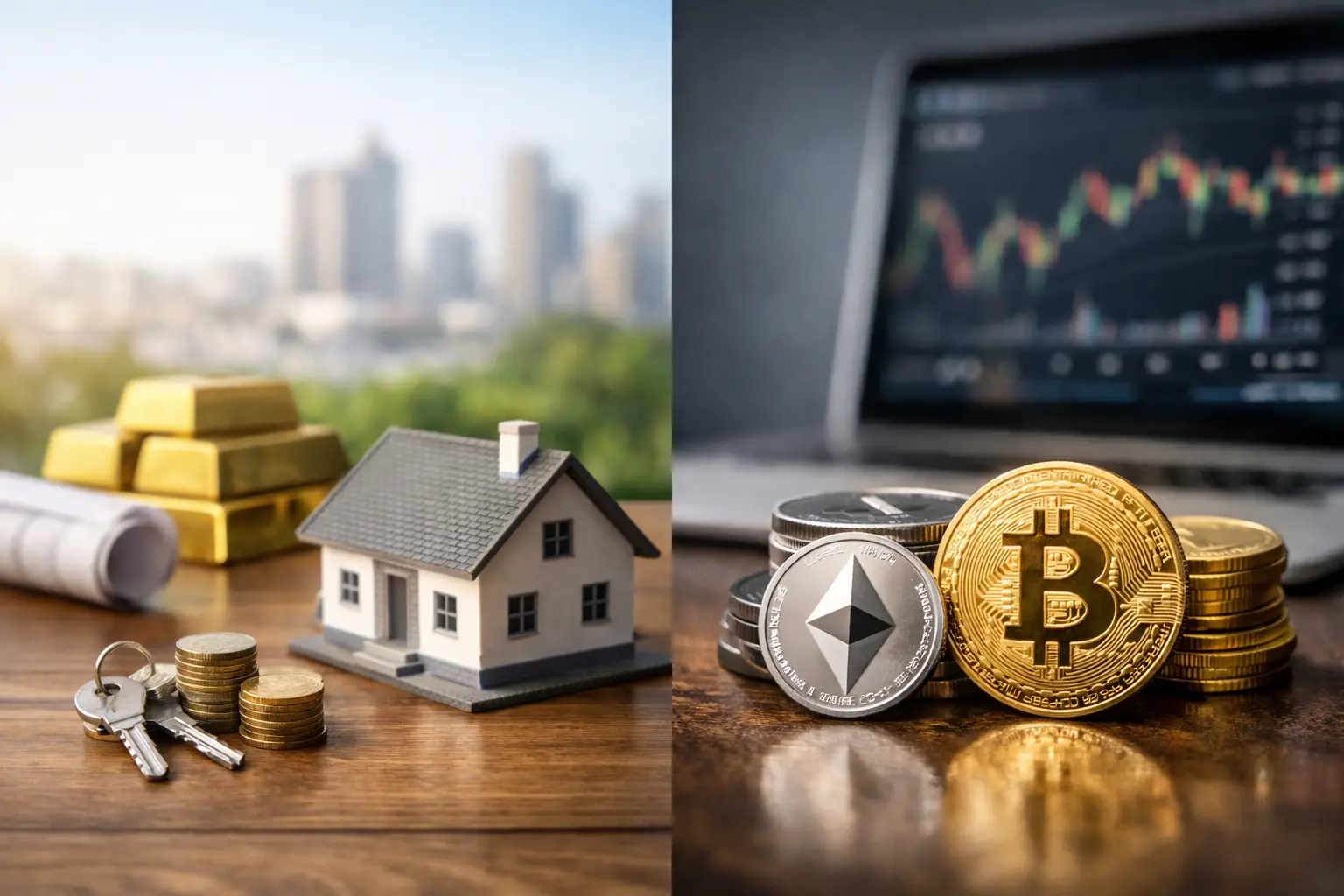
A lot of first-time investors are not choosing between two versions of the same thing. They are choosing between two very different ideas of wealth. That is what makes real assets vs crypto such a useful comparison. One is built around ownership of physical, income-producing assets. The other is built around digital networks, scarcity and market sentiment.
If you are trying to grow your money sensibly, the real question is not which one is more exciting. It is which one fits your goals, risk tolerance and time horizon.
Real assets vs crypto: the core difference
Real assets are tangible investments with underlying economic use. Think property, energy infrastructure, land or logistics facilities. They exist in the physical world, can produce income and are often linked to long-term demand. People need homes, power, transport and storage whatever the market mood.
Crypto is different. It is a digital asset class, usually decentralised and traded on blockchain-based networks. Some investors see it as a new financial system. Others see it as a speculative asset driven mainly by momentum, adoption and belief. Both views can be partly true.
That difference matters because it shapes how value is created. With real assets, value often comes from rent, usage, contracts, inflation-linked pricing and long-term appreciation. With crypto, value is more often shaped by scarcity, market demand, utility within a network and investor sentiment.
Neither is automatically better. But they serve different roles in a portfolio.
Why real assets appeal to long-term investors
Real assets tend to attract investors who want something grounded in the real economy. That does not mean they are risk-free. Property values can fall, projects can underperform and income is never guaranteed. But the investment case is easier to follow because there is an identifiable asset underneath it.
A residential development has land, buildings and demand for housing. A renewables project has infrastructure, energy generation and contracted revenues. These are not abstract drivers. They are commercial activities with measurable outputs.
For many UK investors, that creates a stronger sense of control. You are not just buying price movement. You are buying exposure to something with practical use and potential cash flow.
This is also where accessibility has changed. In the past, gaining exposure to real estate or infrastructure often meant large deposits, specialist knowledge or institutional access. Fractional investing has lowered that barrier. Platforms such as CurveBlock have helped open access by allowing investors to start from just £10 through a UK-regulated structure and gain exposure to a diversified fund rather than relying on a single asset.
That shift matters for younger investors and savers who want asset-backed growth without needing buy-to-let money.
Why crypto attracts attention so quickly
Crypto has captured interest for obvious reasons. It can move fast, it feels modern and it offers the possibility of outsized returns. For digitally confident investors, it can also seem more aligned with the future than traditional markets.
There is a genuine case for crypto as a high-risk, high-volatility growth allocation. Some blockchain networks may become more important over time. Some digital assets may hold long-term value if adoption continues. And for investors comfortable with sharp price swings, that upside is part of the appeal.
But speed cuts both ways. The same asset that rises dramatically can also fall just as hard. Price discovery in crypto is still heavily influenced by sentiment, regulation, liquidity and speculation. Even when a project has strong technology, that does not guarantee stable returns.
For most retail investors, crypto is not difficult because it is digital. It is difficult because valuation is less intuitive. You can assess occupancy rates, rental demand or infrastructure usage with real assets. Crypto often asks you to judge adoption curves, tokenomics and network confidence. That is a very different skill set.
Risk looks different in each market
When people compare real assets vs crypto, they often reduce the debate to volatility. Crypto is volatile, property is steady. That is directionally true, but it misses the detail.
Real assets carry operational and market risk. Property can be affected by interest rates, construction costs, tenant demand and local economic conditions. Infrastructure projects can face delays, maintenance issues and policy changes. These are real risks, but they are often linked to identifiable business factors.
Crypto risk is broader and sometimes harder to model. There is market volatility, yes, but also platform risk, custody risk, regulatory shifts, smart contract failures and liquidity events. An asset can lose value because sentiment turns, because a major exchange fails, or because a regulator changes the rules.
That does not mean one category is safe and the other dangerous. It means the source of uncertainty is different. Many investors find real assets easier to understand because the risks are more familiar and more closely tied to the physical economy.
Income versus speculation
One of the clearest dividing lines is income.
Many real assets are designed to generate yield. Rental income from property and revenues from infrastructure can provide a return stream alongside capital growth. Again, income is not guaranteed, but the model is built around productive assets.
Most crypto investments do not work that way. Their appeal tends to be capital appreciation rather than underlying income. There are crypto-based yield mechanisms, but these often introduce additional layers of complexity and counterparty risk. What looks like passive income can sometimes turn out to be compensation for taking on hidden exposure.
If your goal is long-term wealth building with a focus on tangible value, income-producing assets may feel more aligned with that objective. If your goal is asymmetric upside and you can tolerate losses, crypto may still have a place, but usually as a smaller, speculative allocation rather than the foundation of a portfolio.
Inflation, stability and real-world demand
Real assets are often discussed in the context of inflation for a reason. Physical assets such as property and infrastructure may benefit from rising replacement costs, contractual pricing mechanisms or continued essential demand. People still need places to live and energy systems still need to function.
That does not make real assets a perfect inflation hedge in every period. Higher interest rates can pressure valuations, and not every project passes through costs efficiently. But there is at least a direct relationship between the asset and real-world economic activity.
Crypto is sometimes presented as an inflation hedge too, especially where supply is capped. The theory is understandable. In practice, however, crypto has often behaved more like a risk asset than a defensive one. During periods of broader market stress, it has frequently sold off sharply.
For investors looking for resilience rather than headlines, that distinction matters.
Liquidity, access and investor behaviour
Crypto is usually more liquid than real assets. You can often buy or sell quickly, sometimes instantly. That flexibility appeals to investors who value speed and control.
Real assets are typically less liquid, especially in direct ownership structures. That can be a drawback if you need immediate access to cash. But lower liquidity can also discourage impulsive decisions. When investors cannot react to every market wobble, they may be more likely to stay focused on long-term outcomes.
Access is no longer the advantage crypto once had. Digital platforms have made it far easier to invest in regulated, fractional real assets without needing six figures in capital. That changes the comparison. You no longer have to choose crypto just because traditional asset classes feel locked behind high entry costs.
So which fits your portfolio?
For most retail investors, this is not really a winner-takes-all decision. It is a portfolio design question.
If you want asset-backed exposure, potential income and a clearer link to the real economy, real assets are often the stronger fit. They may suit investors who care about long-term wealth building, diversification and lower drama.
If you are comfortable with sharp volatility, uncertain valuation and the possibility of significant loss in exchange for higher upside, crypto may deserve a smaller place as a speculative satellite holding.
The key is proportion. Treating crypto like a core wealth-building strategy can expose you to more risk than many investors realise. Treating real assets like they are completely immune to market pressure would be equally naïve. Good investing usually sits somewhere between fear and hype.
A useful test is simple. Ask yourself what would help you stay invested when markets turn rough. For many people, owning part of a real estate or infrastructure portfolio with tangible value and regulated access is easier to hold through uncertainty than a token whose price can swing wildly in a weekend.
The best investment is rarely the one making the most noise. It is the one you understand, can afford, and can stick with long enough for compounding to do its work.